Side-by-Side vs Facing Desks for a Home Office for Two
Compare focus, chair clearance, calls, daylight and shared storage before choosing a two-person desk arrangement.
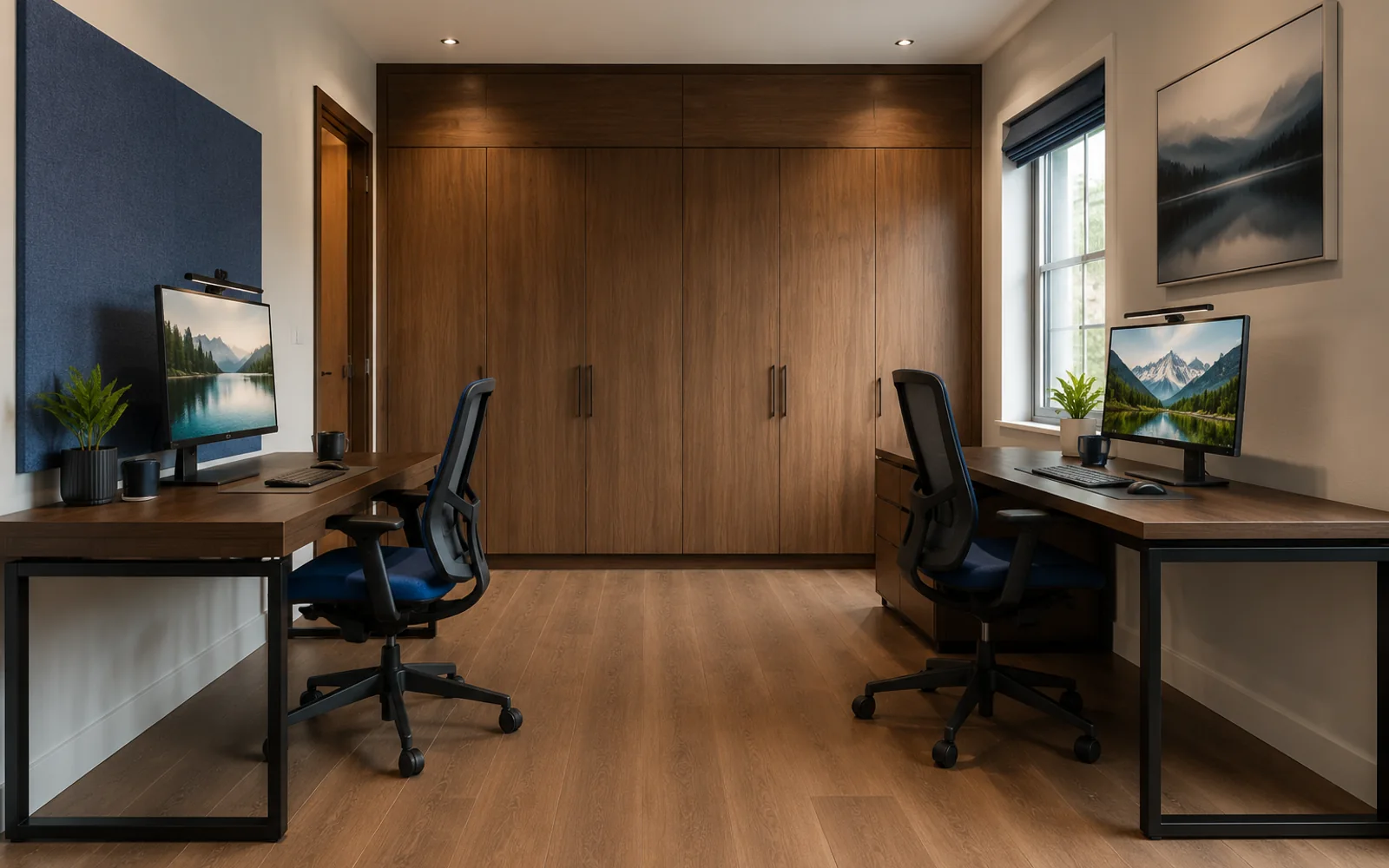
Side-by-side desks use one long wall efficiently and simplify shared power and storage. Facing desks create two more independent work zones and can fit a squarer room, but they require enough depth for both desks, screens and chairs. The better arrangement depends less on style than on simultaneous calls, monitor count, daylight and the route behind each chair.
Side-by-side desks
Choose this arrangement when the room has one long uninterrupted wall and both people can work with similar light. A continuous worktop can feel calm and makes cable management easier. Shared drawers or a cabinet can sit between the two positions.
The trade-off is acoustic and visual overlap. Two people on calls beside each other may appear in one another's camera frames, and a wide monitor setup can make the long wall feel crowded. Give each person a defined surface and avoid placing the shared printer or supplies where one user must reach across the other.
Facing desks
Facing desks can separate screens and give each user a different wall behind the camera. They work well when conversation is useful or when the room has enough central depth. The arrangement also creates a natural shared zone between the desks.
The main risk is collision. Measure desk depth, monitor stands, both chairs at their pulled-back position, and any passage that must run behind them. Screens facing each other can also reflect movement; a low acoustic panel may help, but it should not block daylight.
A third option: back-to-back
Back-to-back desks create strong visual separation and independent camera views. They need careful cable routing and usually more room depth than expected. Check that neither chair blocks the entrance or storage when both are occupied.
Make the choice with real working conditions
Ask these questions before selecting a layout:
- Do both people take video calls at the same time?
- Does either setup require two monitors or deeper creative equipment?
- Can both chairs move without entering the other person's path?
- Is there one shared storage wall, or does each user need personal storage?
- Where does daylight fall at the busiest time of day?
The home office for two page starts with two workers selected and shows a real warm-contemporary example. The featured two-person case records the dual-workstation constraint and three design decisions rather than presenting an anonymous render.
Use the home office layout planner to compare desk zones and circulation before deciding on a visual finish. If the placement is already clear, use the home office design tool for an HD Render of one direction. Verify desk and chair dimensions in the room before purchasing furniture.
Reviewed 17 July 2026. Concept layouts clarify relationships but do not certify measured clearances.